M1.4 Nut Dimensions: Thread & Diameter
This charts is based on (DIN 934 / ISO 4032) standard for a regular series hex nut. The thread dimensions comply with DIN 13-1 (coarse series), DIN 13-21 (fine series) and ISO 68-1 standards to ensure a precise fit and reliable engagement across ultra-fine metric fastening systems.
Disclaimer: Actual dimensions, including the width across flats (spanner or wrench size), nut height, and thread tolerance may vary depending on the specific manufacturing class and material — always verify with the official product datasheet before use or buying.

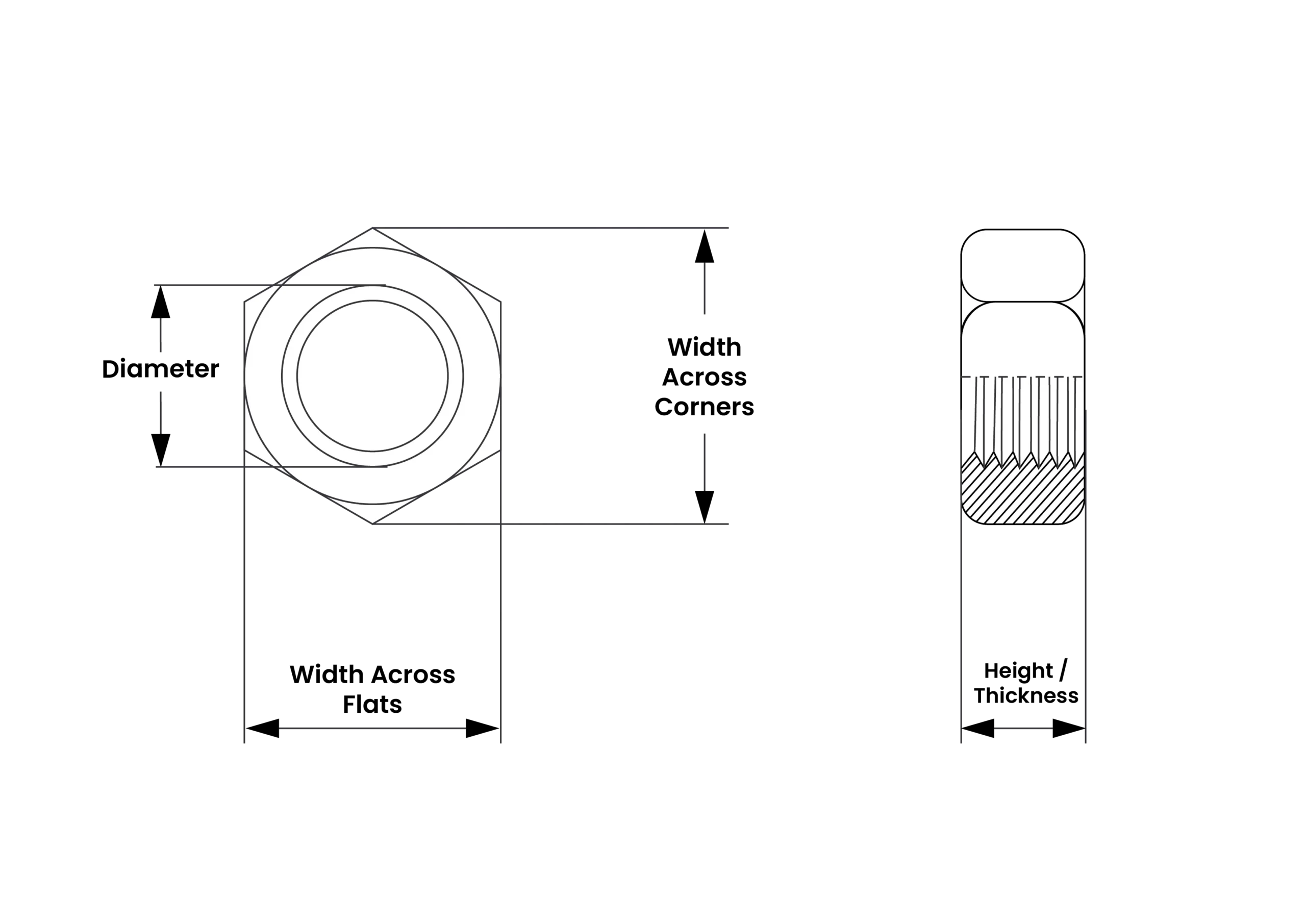
| M1.4 x 0.3 Hex Nut – DIN 13-1/ISO 68-1 | ||
|---|---|---|
| Dimension | Size (mm) | |
| Min | Max | |
| Major Diameter | 1.4 | 1.509 |
| Pitch Diameter | 1.27 | 1.35 |
| Minor Diameter | 1.183 | 1.258 |
| Thread Pitch | 0.3 | |
| M1.4 x 0.2 Hex Nut – DIN 13-21/ISO 68-1 | ||
|---|---|---|
| Dimension | Size (mm) | |
| Min | Max | |
| Major Diameter | 1.4 | 1.492 |
| Pitch Diameter | 1.27 | 1.333 |
| Minor Diameter | 1.183 | 1.258 |
| Thread Pitch | 0.2 | |
| Metric to Inch Converter | |
|---|---|
| Enter mm to convert to inches | |
Frequently Asked Questions
What size wrench or spanner do I need for an M1.4 nut?
An M1.4 hex nut typically requires a 3 mm wrench or socket. The standard width across flats (s) for an M1.4 nut is 3.00 mm. Due to the delicate nature of these fasteners, specialized micro-tools are required to avoid rounding the hex corners.
When is the M1.4 nut typically preferred over M1.2 or M1.6?
The M1.4 size is a standard choice in eyeglass repair and small electronics where M1.6 is slightly too bulky, but the load requirements require slightly more thread surface area than an M1.2 fastener can provide.