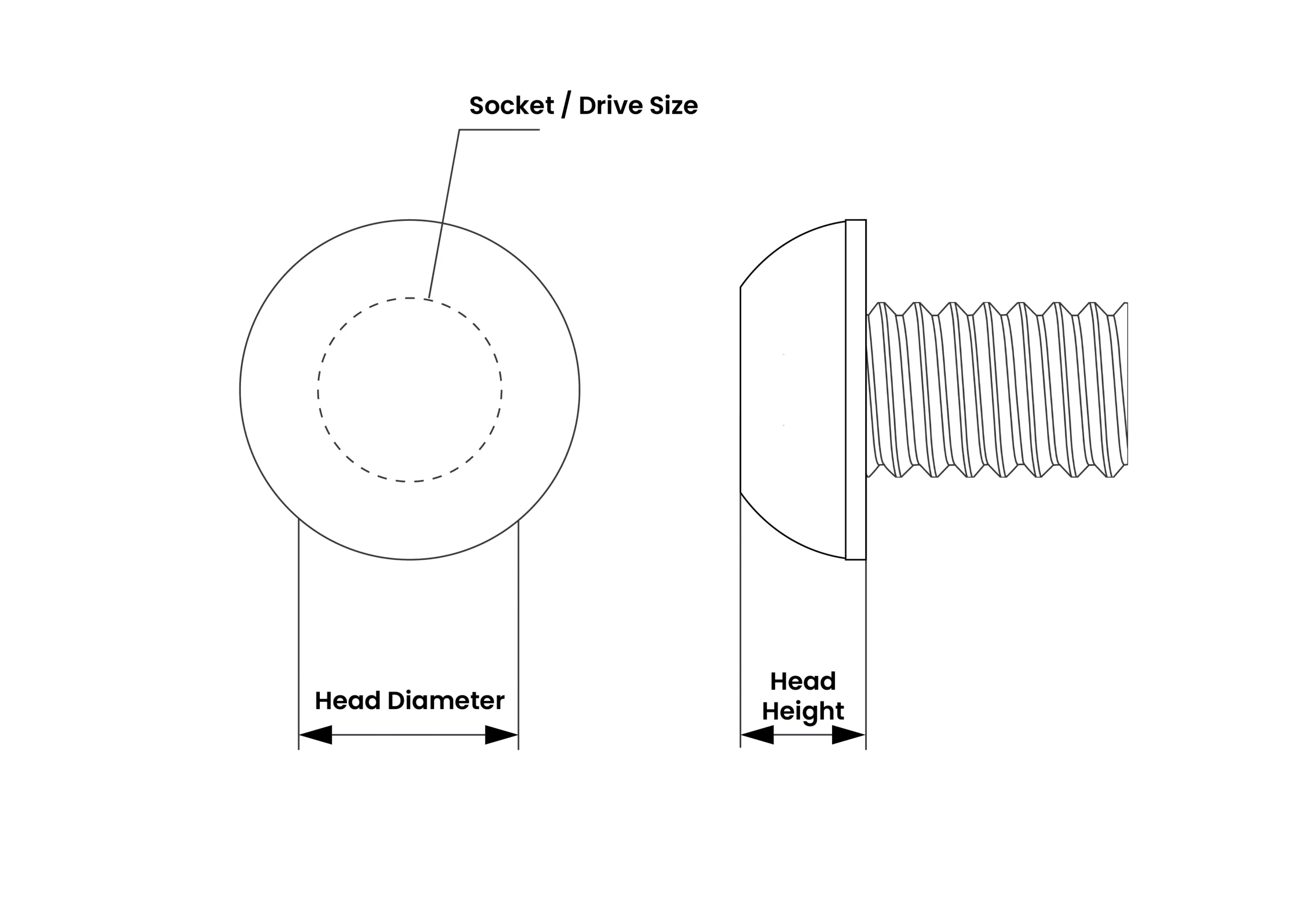
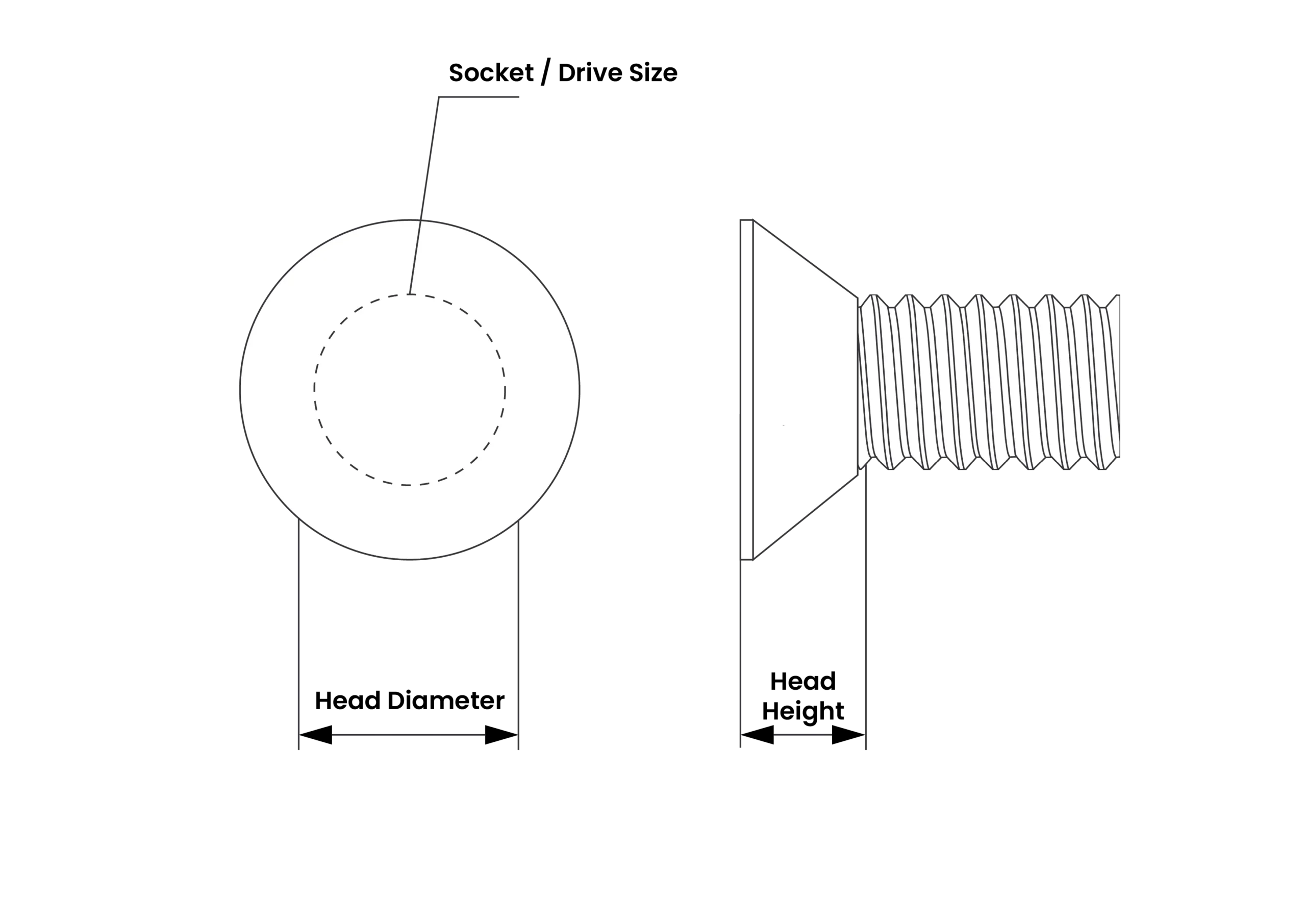
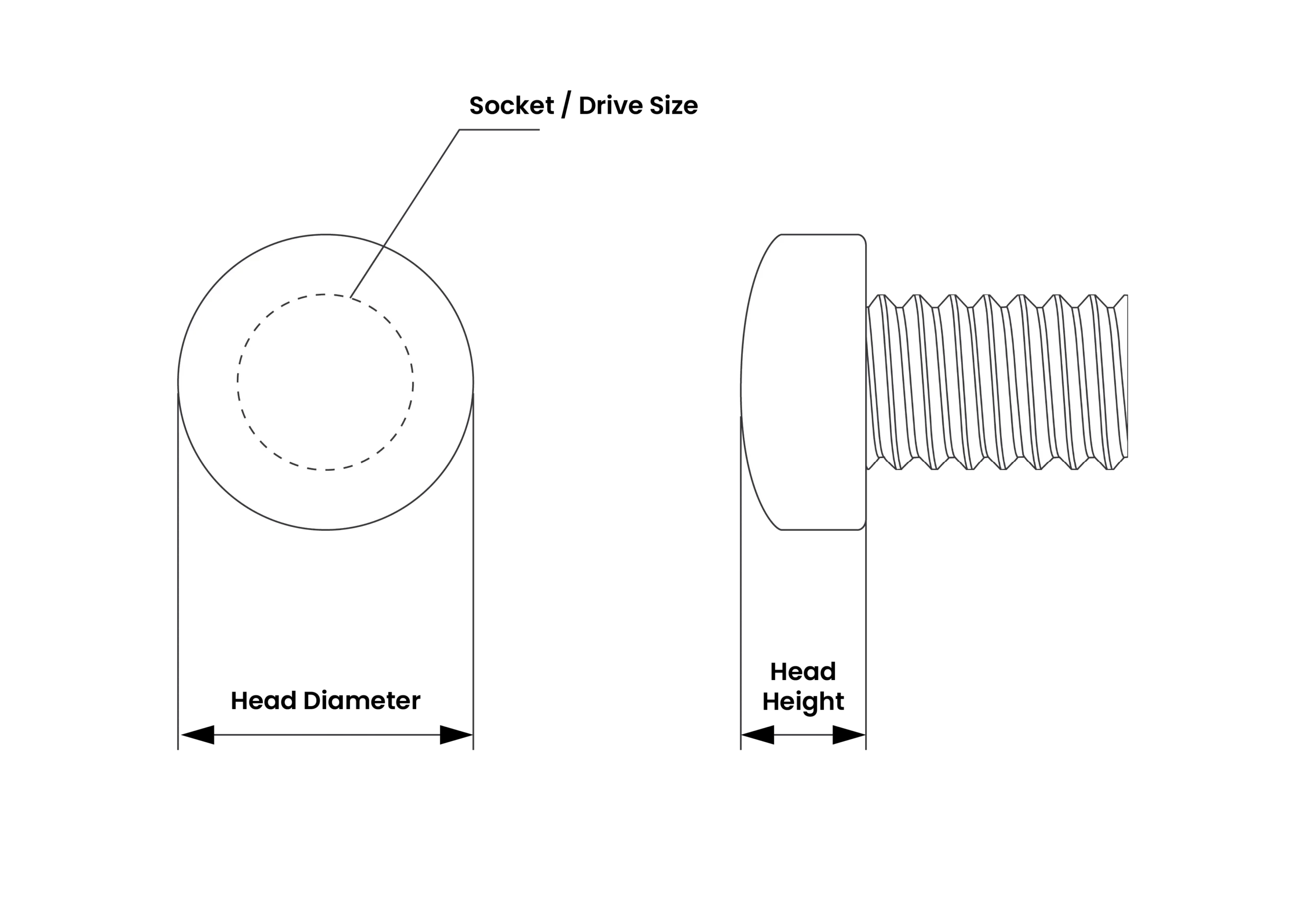
M16 screw or bolt dimensions and sizes are heavy-duty fasteners critical for bridge construction, heavy industrial machinery, wind turbine assembly, and large-scale automotive frames. This size has a 16.00mm nominal major diameter and is available in M16 x 2.0 for the coarse series and M16 x 1.5 for the fine series, where 2.0 and 1.5 represent the thread pitch in millimeters. This reference chart follows respective DIN and ISO standards for each head style and DIN 13-1 (coarse), DIN 13-21 (fine), and ISO 68-1 standards for thread dimensions to ensure global compatibility.
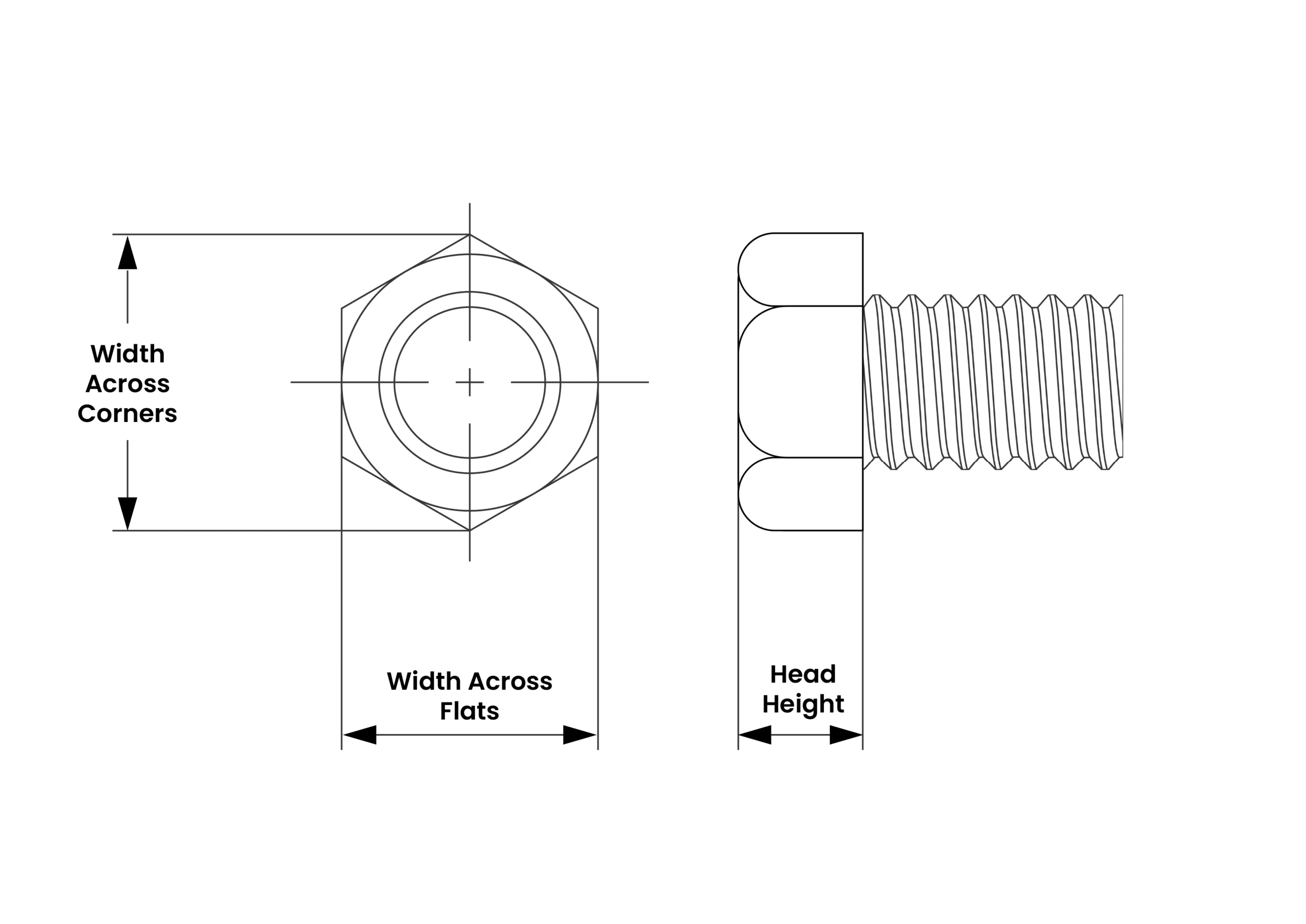
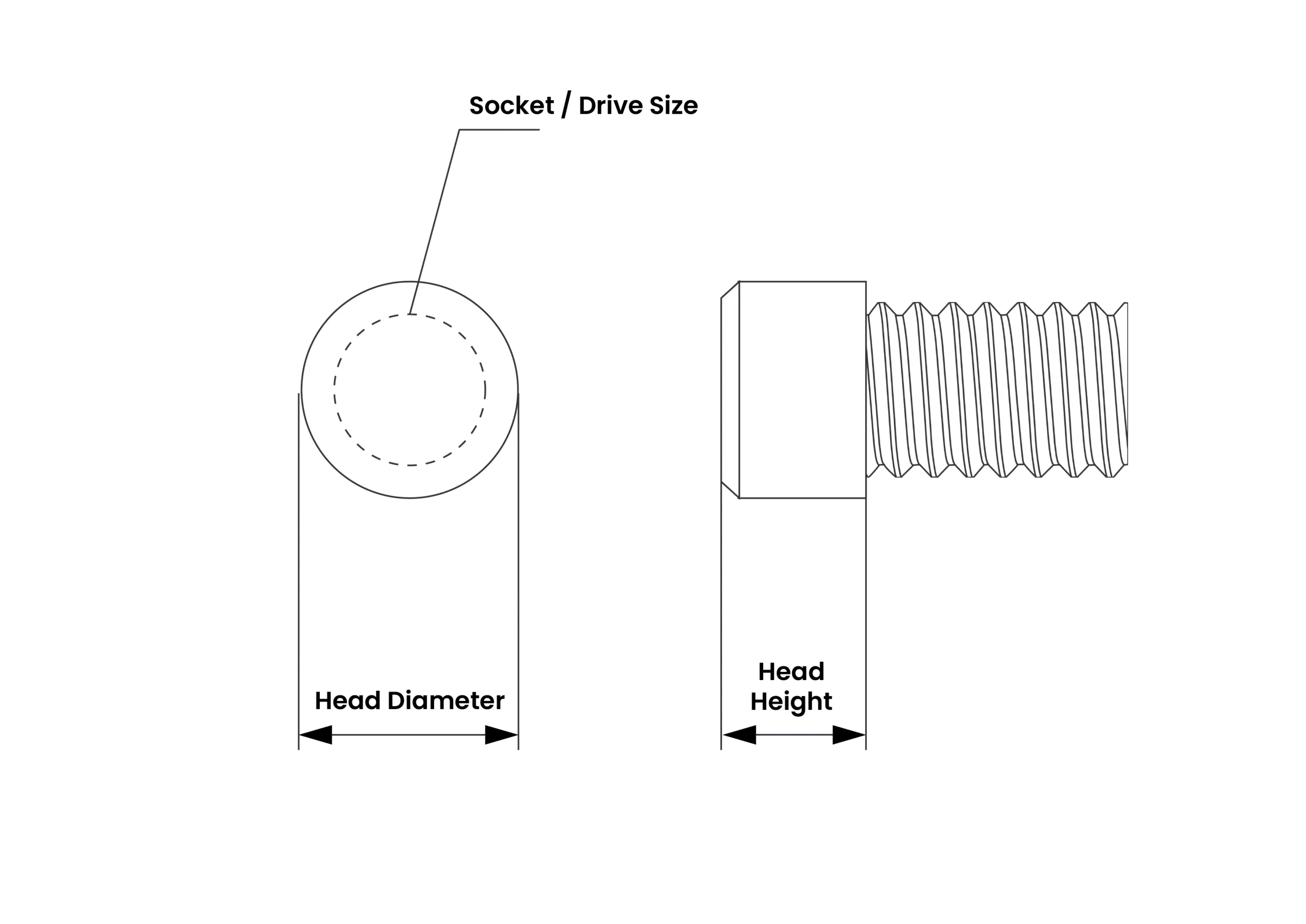
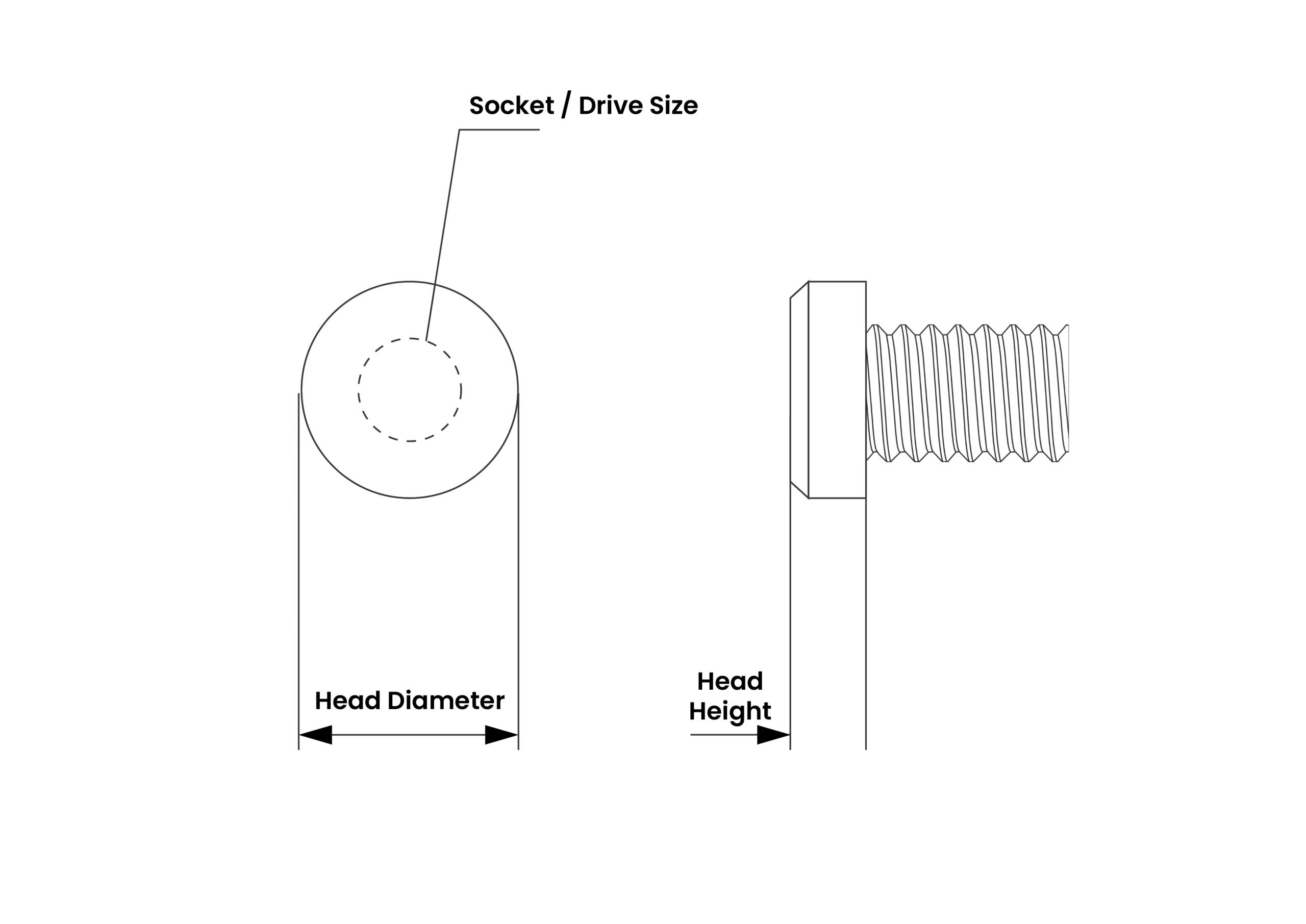
Disclaimer: Actual dimensions and tolerances may vary slightly depending on head style (e.g., Hex Head, Socket Head Cap Screw, Flange Bolt), manufacturer, or material grade — always verify with the official product datasheet before use.
M16 x 2.0 Screw & Bolt – DIN 13-1/ISO 68-1
Dimension
Size (mm)
Min
Max
Major Diameter
15.682
15.962
Pitch Diameter
14.503
14.663
Minor Diameter
13.271
13.797
Thread Pitch
2.0
Major Diameter
15.682
15.962
Pitch Diameter
14.563
14.663
Minor Diameter
13.331
13.797
Thread Pitch
2.0
M16 x 1.5 Screw & Bolt – DIN 13-21/ISO 68-1
Dimension
Size (mm)
Min
Max
Major Diameter
15.732
15.968
Pitch Diameter
14.854
14.994
Minor Diameter
13.93
14.344
Thread Pitch
1.5
Major Diameter
15.732
15.968
Pitch Diameter
14.904
14.994
Minor Diameter
13.98
14.344
Thread Pitch
1.5
M16 x 1.0 Screw & Bolt – DIN 13-21/ISO 68-1
Dimension
Size (mm)
Min
Max
Major Diameter
15.794
15.974
Pitch Diameter
15.206
15.324
Minor Diameter
14.59
14.891
Thread Pitch
1.0
Major Diameter
15.794
15.974
Pitch Diameter
15.249
15.324
Minor Diameter
14.633
14.891
Thread Pitch
1.0
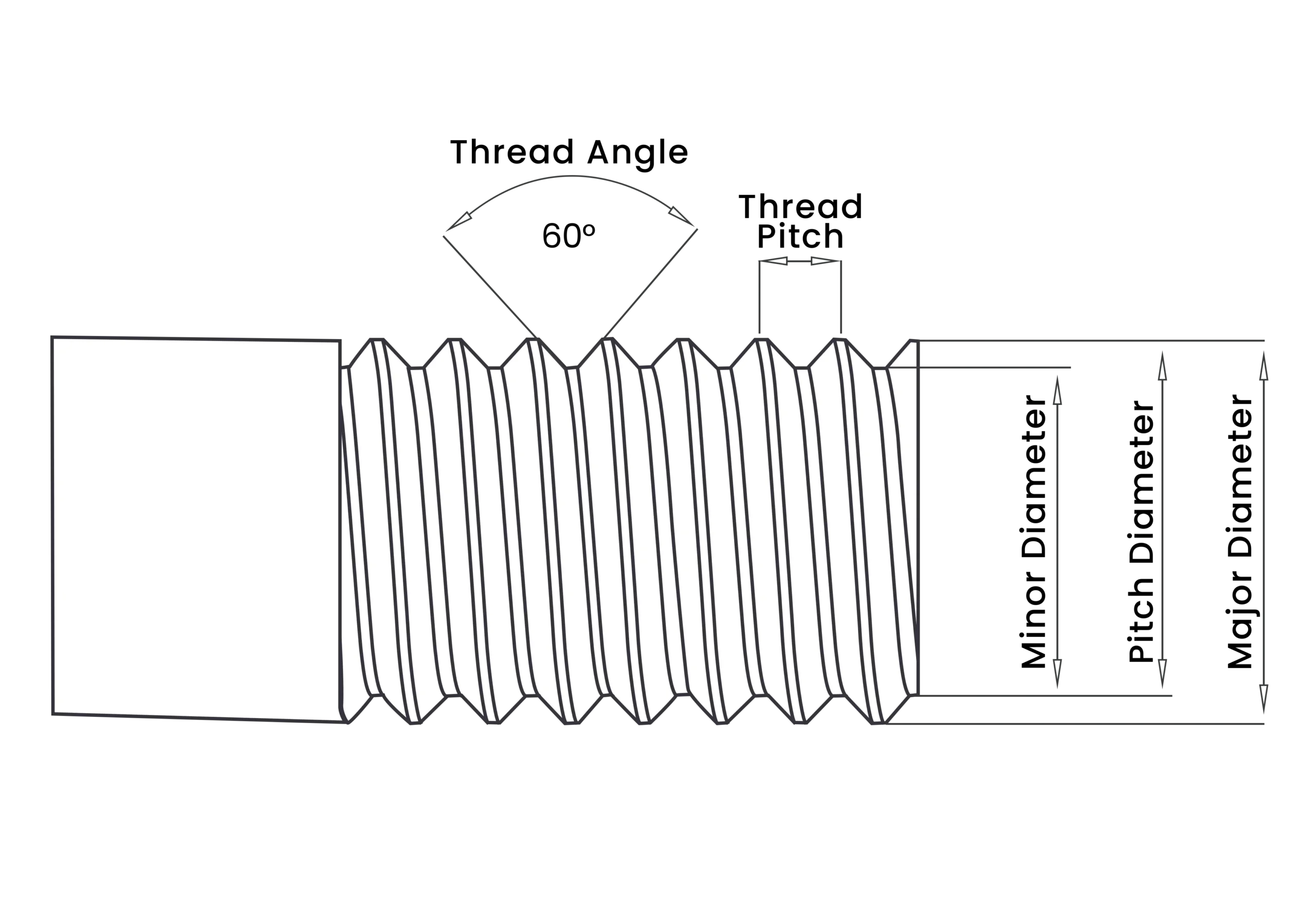
Major Diameter –
The largest diameter of the external thread, measured crest to crest.
This defines the nominal size (e.g., M12 which is 12 mm of nominal major diameter).
Pitch Diameter –
The diameter of an imaginary cylinder where the thread thickness equals
the space between threads. This is the critical dimension for thread fit
(Tolerance classes 2A/3A for Imperial; 6g/4g6g for Metric).
Minor Diameter –
The smallest diameter of the external thread, measured root to root.
This represents the core strength of the fastener and is the theoretical
maximum diameter of the tap drill.
Thread Pitch –
The distance from a point on one thread to the corresponding point on the next.
What is the tap drill size for M16 screws or bolts?
For metric fasteners, the recommended tap drill size can be calculated using this formula: Major Diameter – Thread Pitch. For an M16 x 2.0 (Coarse), the recommended tap drill is 14.00mm. For an M16 x 1.5 (Fine), the recommended drill size is 14.50mm.
What clearance hole size is needed for an M16 screw or bolt?
For an M16 fastener, a 17.00mm drill bit is utilized for a Close Fit, a 18.00mm bit is used for a Normal Fit, and an 19.00mm bit is recommended for a Loose Fit. A Normal Fit is the industry standard to ensure the bolt shank passes through the assembly without binding while maintaining structural alignment.
What is the equivalent size for M16 in inch (imperial)?
For size M16, the nearest inch (imperial) match is 5/8".
This particular size has a maximum major diameter of 15.875 mm (0.625 inch),
which means the measurement offset is only about 0.099 mm (0.0039 inch).
While these diameters are nearly identical, metric and imperial fasteners are not interchangeable. They utilize fundamentally different thread systems: Imperial fasteners are measured by Threads Per Inch (TPI), whereas metric fasteners use Thread Pitch. Mixing metric and imperial hardware is strongly discouraged, as it can lead to damaged components, reduced load-bearing capacity, and catastrophic mechanical failure.
What is the difference between a bolt and a screw?
The difference is based on the intent of the fastener’s use; If the primary intent is for the fastener to pass through an unthreaded hole and be assembled with a nut, it is a Bolt. In this application, you usually hold the head and turn the nut to apply tension. But if the primary intent is for the fastener to be installed into a threaded (tapped) hole, it is a Screw. In this application, the connection is tightened by turning the head of the fastener itself.